In This Article
Overview
Generative AI represents a profound expansion of design possibility for luxury home architecture. Rather than iterating on a single design concept, generative algorithms can explore thousands of design permutations within defined parameters — site constraints, program requirements, aesthetic preferences, sustainability targets, and budget — in minutes, surfacing unexpected solutions that human designers might never have reached independently. Versailles Luxury Homes integrates generative AI as a powerful creative tool that amplifies our architects' vision.
The promise of generative AI in luxury residential architecture is not homogenization — not every client receiving a variation of the same algorithm-produced design. Rather, it is radical personalization: each set of generative constraints is unique to each client, producing designs that are genuinely tailored to their site, program, and aesthetic preferences while drawing on the full computational power of modern AI systems.
What Is Generative AI in Architecture?
Generative AI in architecture uses machine learning models trained on vast datasets of architectural precedents, structural systems, climate data, and material properties to generate novel design solutions. Unlike rule-based parametric design, generative AI can learn from design quality feedback and improve its outputs over time, developing an increasingly sophisticated understanding of what makes designs compelling, performant, and buildable.
Parametric Design and Algorithmic Form
- Grasshopper and Rhino: parametric modeling where form responds dynamically to changing parameters
- Evolutionary algorithms generating structural optimized forms with minimum material
- Facade performance optimization: parametric shading systems adapted to DFW solar angles
- Space layout generation: AI optimizing room relationships for natural light and circulation
- Acoustic form generation: ceiling and wall geometries optimized for sound diffusion
Generative AI for Site-Responsive Design
Every building site presents unique opportunities and constraints — topography, views, solar orientation, neighboring structures, prevailing winds, and landscape character. Generative AI platforms that incorporate site analysis data can produce design options that are genuinely site-responsive, positioning the home to capture the best views while minimizing morning glare, orienting major living spaces to prevailing breezes, and stepping the building profile in response to topographic changes.
Client Co-Creation with Generative AI
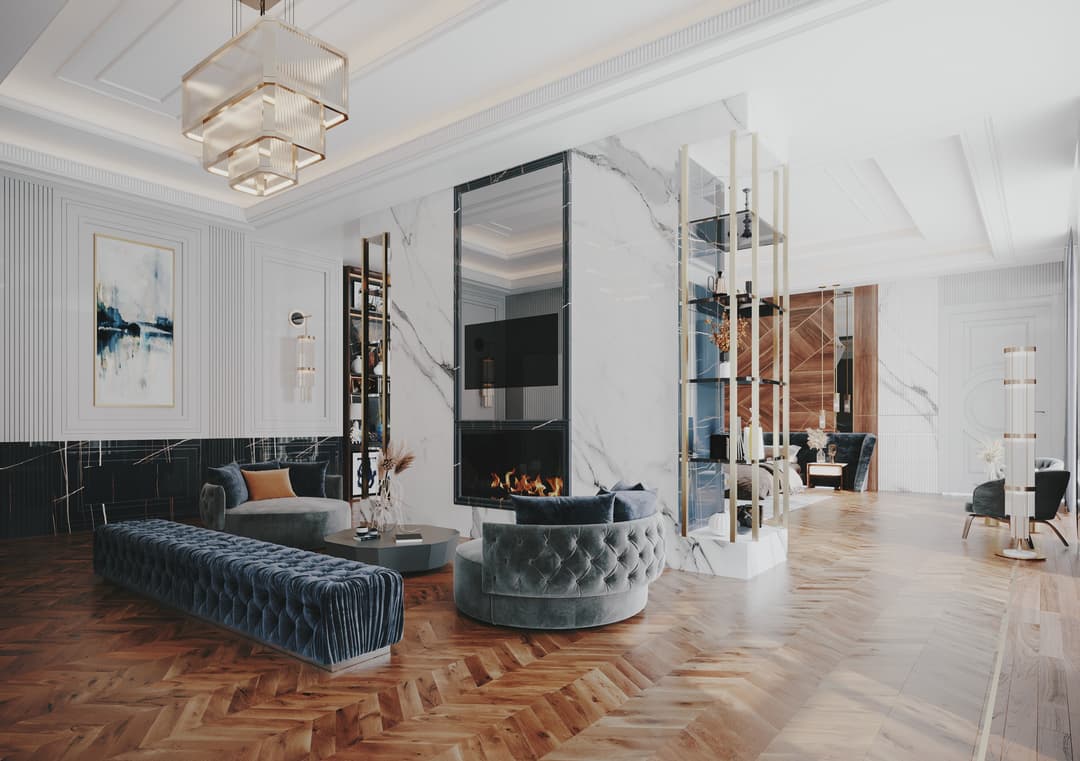
One of the most exciting applications of generative AI in our design process is the ability to involve clients directly in the generation of design options. Using accessible visual interfaces, our clients can adjust parameters — building height, roof form, window proportion, material palette — and see the design respond in real time. This co-creation experience dramatically increases client engagement with and ownership of the design process, producing homes that clients feel deeply connected to because they participated in their creation.
From Generation to Fabrication
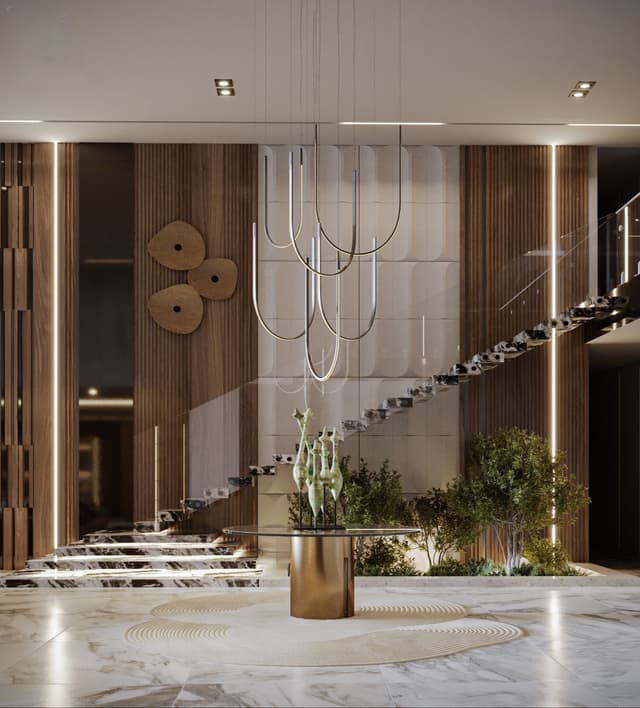
Generative AI is most powerful when it is connected end-to-end to fabrication — where the geometries produced by algorithmic design can be directly output to CNC fabrication, 3D printing, or robotic assembly without intermediate translation. For luxury home elements like custom facade panels, parametric staircases, and bespoke cabinetry, this direct design-to-fabrication pipeline eliminates error, reduces cost, and allows design complexity that would be prohibitively expensive through conventional construction methods.
Balancing AI Innovation with Human Craft
At Versailles Luxury Homes, generative AI is a tool, not the designer. Every AI-generated design concept is evaluated, refined, and developed by our experienced architects — bringing the judgment, material knowledge, and design sensibility that only human expertise provides. The combination of AI-generated possibility and human design intelligence consistently produces better outcomes than either could achieve alone.
Generative AI gives our designers the ability to explore the entire solution space of a design problem — not just the corner of it that any single designer could reach in a lifetime.
Key Takeaways
- Generative AI explores thousands of design permutations to surface unexpected optimal solutions.
- Parametric design creates forms that respond dynamically to site conditions and performance requirements.
- Client co-creation with AI tools increases engagement and ownership of the design outcome.
- Direct design-to-fabrication pipelines enable design complexity impossible through conventional methods.
- AI and human design intelligence in combination produce consistently superior outcomes.